The 38-32 upset in Düsseldorf ended a 14-year unbeaten run. But the number that explains it isn’t 38, or 32, or 14. It’s 43,000 — and a passport that says its bearer is not a citizen.
There is a version of this story that writes itself, and most of the internet wrote it on Friday afternoon. Smallest nation in the tournament beats biggest. Thirty-third-ranked team beats first. Tua Tagovailoa’s little brother beats the country that never quite made room for him. David, Goliath, roll credits.
That version is true. It is also the least interesting thing that happened in Düsseldorf.
Because American Samoa did not beat a foreign country on Friday. It beat its own — with players that country’s football system built, in a sport that country invented, wearing a flag its people cannot cast a presidential vote under. Head coach Sterling Carvalho said the quiet part into a microphone afterward, and nobody seemed to notice it was the whole story:
“We’re part of America but we are Samoan.”
Sterling Carvalho, head coach, American Samoa
That sentence is not a slogan. It’s a legal condition. And on Friday it was, briefly, a scoreboard.
What actually happened
American Samoa 38, United States 32.
Taulia Tagovailoa completed 29 of 36 passes for 213 yards and five touchdowns — a stat line with almost no waste in it. Receiver Bralon Brown, who bounced through Southern Miss, Marshall and Ole Miss, caught 11 balls for 118 yards. Tai Tiedemann and Jahcour Pearson found the end zone repeatedly, with Pearson securing the touchdown that closed it out late.

For the United States, it was a first competitive defeat since 2012, when Austria beat them in the World Championship final. In between: world titles in 2014, 2016, 2018, 2021 and 2024, and a winning streak that had grown long enough to stop being a streak and start being an assumption.
Carvalho’s pregame instruction was almost aggressively unromantic.
“I told our players that we couldn’t be in awe or be intimidated. We played the football that we practiced and prepared for.”
Both teams finished group play at 2-1. American Samoa took Group A on the head-to-head result, which meant the debutants — playing in their first World Championship, ranked No. 33 on the planet — went into the knockout round seeded above the six-time champions.
The pipeline finally ran backwards
Here is what makes this different from every other flag-planting upset in international sport.
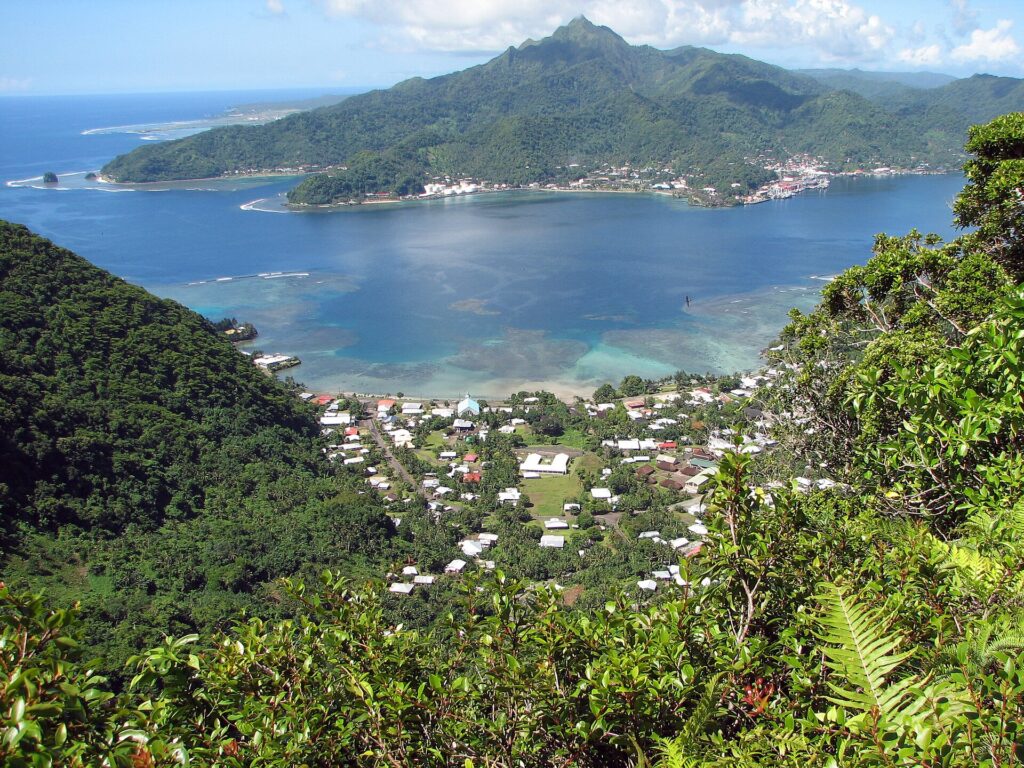
For sixty years, football talent has moved off Tutuila in exactly one direction. Out. To Pop Warner fields in Carson and Long Beach, to Hawai’i and Utah, to the SEC and the Big Ten, and for a lucky, punishing few, to Sundays in the NFL. The island supplies. The mainland wears the jersey. There’s an old line on the island about the two ways to get off the rock: the NFL, or the military.
They aren’t kidding about the second one either. American Samoa has the highest military enlistment rate of any U.S. state or territory — an average of roughly 166 people a year from a population of about 43,000, the poorest per capita of anywhere flying the American flag.
So the roster that beat Team USA is not a curiosity. It’s a receipt. Tagovailoa played at Alabama, then Maryland. Brown played at three SEC-adjacent programs. These are products of American football’s development machine — the same machine that stocks Team USA — who, when handed a choice of jersey, chose the one with their island on it.
The pipeline didn’t produce an upset. The pipeline was the upset. It just ran backwards for one afternoon.
The passport problem
To understand why a flag mattered that much, you have to understand what American Samoans are, legally, to the country they just beat.
People born in American Samoa are U.S. nationals — not U.S. citizens. Their passports carry an endorsement stating, in capital letters, that the bearer is a United States national and not a United States citizen. They cannot vote for president. Their delegate in Congress cannot vote on the House floor.
In Fitisemanu v. United States, three American Samoans challenged that status. A federal district court in Utah sided with them. The Tenth Circuit reversed. In 2022 the Supreme Court declined to hear the case, leaving the arrangement in place.
The wrinkle that makes it genuinely complicated: American Samoa’s own government opposed automatic citizenship, arguing that the territory’s distinct political status is what has protected fa’a Samoa — the Samoan way — and its communal land tenure for three thousand years. This is not a simple story about a denial. It’s a story about a people who have been extremely deliberate about what they hold onto.
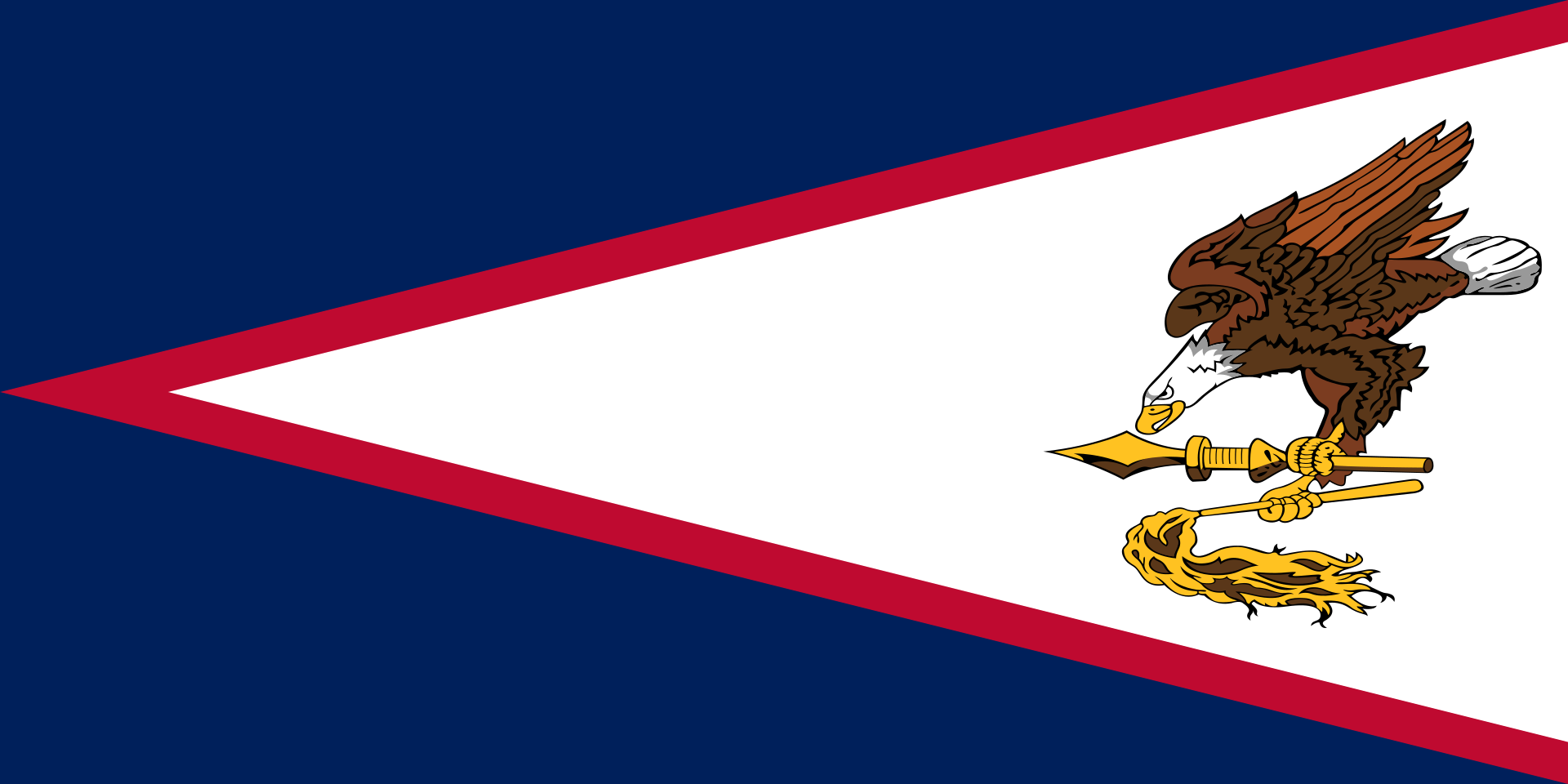
Which is the context in which a national team, an anthem and a flag stop being sports pageantry and start being something closer to infrastructure. American Samoa formed its National Olympic Committee in 1985 and was recognized by the IOC in 1987. It has appeared at every Summer Games since Seoul in 1988. It has never won a medal.
Sport is the one arena that hands American Samoa the standing its paperwork withholds.
Receiver Vailele Peko understood exactly what had been purchased:
“We put our island on the map. We were written out, world No. 33. I hope everybody sees that we are somebody.”
Vailele Peko, wide receiver
Not that we’re good. That we are somebody. Those are different claims, and he made the bigger one.
Then the tournament did what tournaments do
Saturday was less kind. Canada beat American Samoa 24-14 in the quarterfinals, and the run ended at exactly the height where fairy tales usually get cut off.
Team USA, meanwhile, just kept going. Past Japan, 45-38. Past Mexico by two points in the semifinal. And on Sunday, past Italy in the gold-medal game to win the world championship again.
Read that back slowly. The United States lost to American Samoa and won the tournament anyway. Friday now sits in the record as the only blemish on a title run — one line in a results table, like a typo in an otherwise clean document.
The structural math is bleaker still. Flag football debuts at the 2028 Olympics in Los Angeles, and this tournament doubled as the first LA28 qualifier — the top eligible teams earning quota places. Italy took the men’s quota, beating Canada 41-36 in the semifinals to get there. And the United States holds a host-nation berth for LA28 regardless, subject to the usual participation and compliance conditions.
Which produces the strangest fact of the week:
The loss cost Team USA nothing. The win bought American Samoa nothing.
No quota. No medal. No semifinal. Both teams flew home with roughly what they arrived with — except one of them flew home with a world title, and the other flew home with a Friday.
What it bought instead
Except the sport’s ledger isn’t the only one.
In 2028 those Games land in Los Angeles — a county that is home to roughly 12,600 Samoans, in a state holding about 63,000, nearly a third of the entire Samoan population of the United States. Long Beach has the largest Samoan community on the mainland. Carson is next door. This is the diaspora that received sixty years of outbound talent from a 43,000-person territory and turned it into American football.
If American Samoa ever reaches an Olympic field, it will most likely be that one. Playing on American soil, in front of its own people, against the country it belongs to and does not fully belong to, under a flag it went to the Supreme Court to keep distinct.
Friday didn’t get them there. Friday established that the destination is real.
Tagovailoa, asked to explain it, didn’t reach for the tape:
“This team, American Samoa, we set our foundation on our Lord and Savior Jesus Christ.”
Carvalho reached for size:
“We might be the littlest country out here, but we have the biggest hearts.”
Both of them, notice, were answering a question nobody quite asked. Not how did you win. Who are you.
That was the question on the table in Düsseldorf. For one Friday in Germany, forty-three thousand people got to answer it themselves, out loud, with their own name on the front of the shirt.
The score was 38-32. The flag was the whole point.
The 2026 IFAF Flag Football World Championships ran August 13-16 in Düsseldorf, Germany, and served as the first qualifying event for flag football’s Olympic debut at Los Angeles 2028. The United States won the men’s title; American Samoa, in its World Championship debut, finished with the only win anybody took off them.