
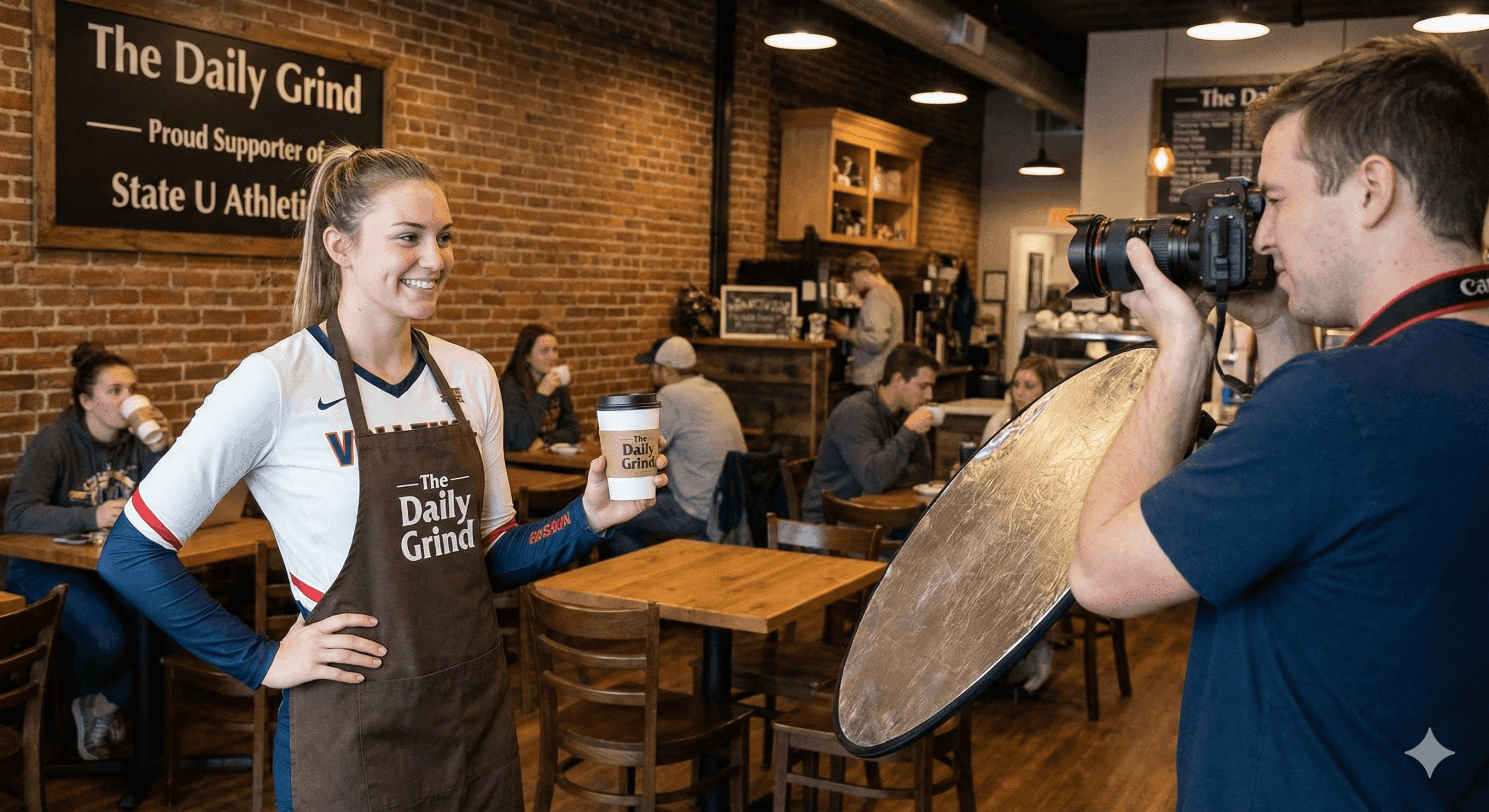
The Real NIL Money Market: Why Local Businesses, Not Big Brands, Are Your Best Bet
Forget the six-figure shoe deals you see on social media. For 99% of student-athletes, the path to real NIL income runs straight through Main Street.
We’ve all seen the headlines. Five-star recruits signing million-dollar deals. Top quarterbacks partnering with national brands. Social media influencers in the transfer portal commanding six figures before they even arrive on campus.
Here’s what nobody’s talking about: That’s not your athlete’s market. And chasing it is costing families real money.
The Big Brand Illusion
When NIL legislation passed, the narrative became obsessed with big brands and massive deals. Every story featured athletes signing with national companies, building massive social media followings, or landing endorsements that rivaled professional athletes.
This created a dangerous misconception: that NIL success means landing a deal with a Fortune 500 company.
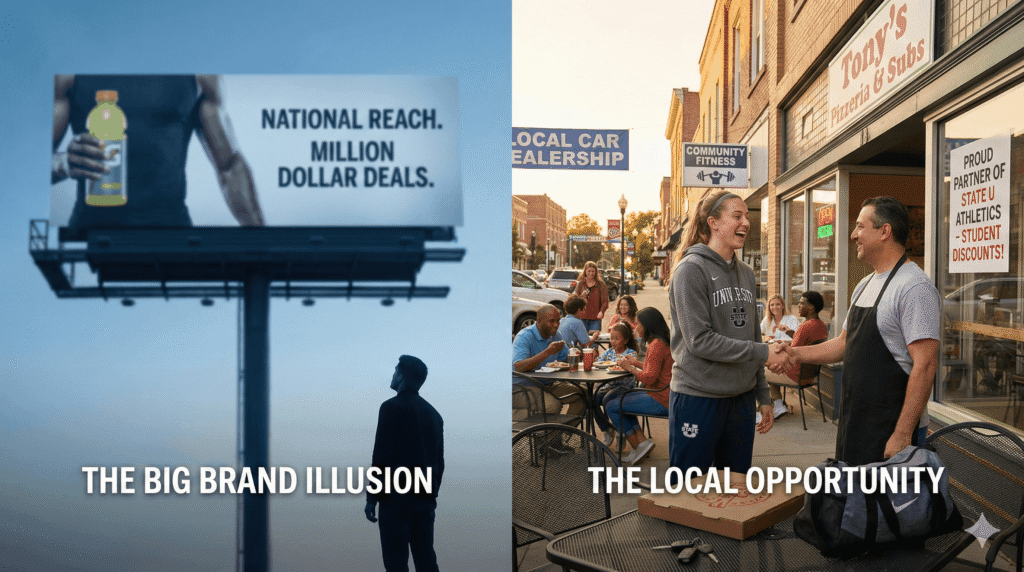
The reality? There are roughly 500,000 NCAA athletes. Maybe 500 of them—0.1%—will ever sniff a significant national brand deal. The rest are competing for an entirely different market. And ironically, it’s a better market.
Why Local Businesses Are the Real Opportunity
Local businesses have something national brands don’t: a genuine need for your athlete.
Think about it from their perspective:
National brands are looking for athletes who can move the needle on a massive scale. They need millions of impressions, viral moments, and household name recognition. They’re buying reach.
Local businesses are looking for community connection, credibility, and customers who live within a 20-mile radius. They’re buying relevance.
Your daughter who starts at point guard for the state university? She might not move the needle for Nike. But for the pizza place two miles from campus, she’s gold. Students eat there. Parents visit on game weekends. Alumni stop by during homecoming. She’s not just an athlete—she’s a trusted face in the exact community that business serves.
The Math Actually Makes Sense
Here’s where it gets interesting.
A local restaurant paying your athlete $500/month for social media posts, appearances, and being in their advertising is spending $6,000 annually. For a small business, that’s a real marketing budget. But it’s sustainable because they’re getting tangible value: foot traffic, brand awareness in their target demographic, and content they can use.
Now compare that to chasing brand deals that may never materialize:
- 10 local businesses at $500/month = $5,000/month = $60,000/year
- 1 national brand deal that never happens = $0/year
The local approach is scalable, sustainable, and actually achievable.
What This Looks Like in Practice
The most successful NIL earners who aren’t elite, top-tier prospects have figured out the local formula:
The rotational basketball player who has partnerships with three local businesses: a fitness center ($400/month for training content and gym appearances), a meal prep company ($300/month for weekly social posts), and a tutoring center ($500/month during the school year for promoting their services to student-athletes).
Monthly income: $1,200. Annual income: $14,400. Plus free meals, free gym membership, and free tutoring services.
The softball outfielder who built relationships with a local car dealership (one appearance per month, $750), an insurance agency owned by an alum ($400/month for being on their website and materials), and a sports medicine clinic ($300/month for content and testimonials).
Monthly income: $1,450. Annual income: $17,400. Plus she drives a loaner car and gets free injury treatment.
These aren’t theoretical. These are real deals happening in college towns across America right now. And they’re being left on the table by families focused on landing the big brand deal that’s never coming.
How to Build the Local Network
The athletes winning in the local market aren’t lucky—they’re strategic.
Start with genuine relationships. The best local NIL deals come from businesses where there’s already a connection. Alumni-owned businesses. Places your family already frequents. Companies owned by parents of other athletes. Start there.
Think beyond social media posts. Local businesses don’t just need Instagram content—they need appearances, they need faces for their local advertising, they need someone to show up at their grand opening. Be the athlete who offers real value, not just a story post.
Bundle yourself with teammates. A local business might not have budget for one athlete, but they might pay for three athletes to appear together at an event or be featured in a campaign. Create group opportunities.
Make it easy for them. Most local business owners have no idea how NIL works or how to structure a deal. Come prepared with a simple one-page proposal: what you’ll do, how often, and what it costs. Remove the friction.
Deliver ridiculous value. In the first deal, over-deliver. Post more than promised. Show up early. Be genuinely enthusiastic. Your reputation in the local business community is your currency. Protect it.
The Long-Term Advantage Nobody Talks About
Here’s what really matters: local business relationships outlast your playing career.
The restaurant owner who paid you $500/month for three years? That’s a relationship. When you graduate and need a job, need advice, or need a connection, that’s your network.
The local real estate agent who sponsored you? They’re referring you to other business owners. They’re writing recommendation letters. They’re offering you internships.
The car dealership that gave you a loaner? They’re teaching you about business, about marketing, about building customer relationships.
National brand deals are transactional. Local business deals are relational. One ends when your eligibility does. The other sets you up for life.
The Tactical Reality
This isn’t just about making money during college. It’s about building business acumen.
When you’re negotiating with a local business owner, you’re learning:
- How to pitch yourself and your value
- How to create and honor contracts
- How to deliver on commitments
- How to build long-term business relationships
- How to think like an entrepreneur
These aren’t just NIL skills. These are life skills. Career skills. Skills that will matter whether you go pro or go into business.
Stop Waiting for the Brand Deal
The families building real NIL income aren’t waiting for someone to discover their athlete. They’re not hoping a viral moment catches a brand’s attention. They’re not comparing themselves to the five-star recruits getting headline deals.
They’re walking into local businesses. They’re having conversations. They’re building proposals. They’re creating value. They’re getting paid.
While everyone else is dreaming about the big brand deal, they’re cashing checks from the car wash, the chiropractor, the coffee shop, and the construction company.
Your Action Plan
Starting today:
- Make a list of 20 local businesses in your college town or hometown
- Identify connections—which ones do you already have a relationship with?
- Create a simple pitch—what you offer, how often, what it costs
- Start conversations—not asking for money, just building relationships
- Deliver value first—post about businesses you love before asking for a deal
The NIL market everyone’s chasing doesn’t exist for your athlete. But the market that does exist—the local market—is sitting there waiting for families smart enough to see it.
The question isn’t whether the opportunity is there. It’s whether you’re going to go get it.
The big brand deal makes for a better headline. The local business deal makes for a better bank account. Choose accordingly.