Quick answer
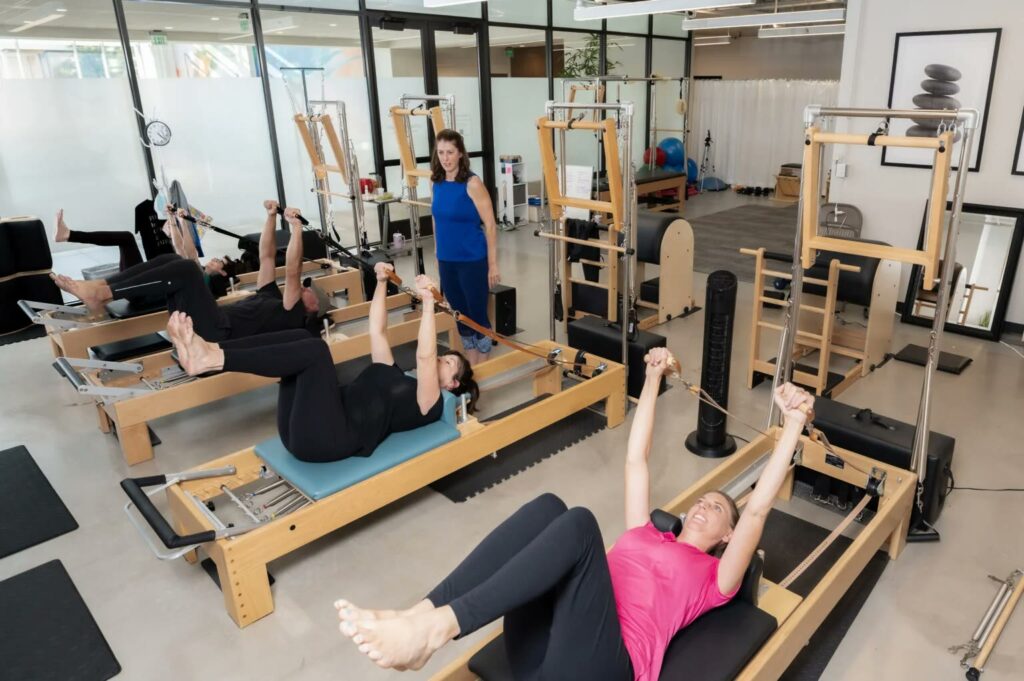
Athletes in Denver use Classical Pilates to build trunk control, hip mobility, single-leg balance and rotational strength that weight-room programs often miss. It is low impact, so it fits recovery days and return-to-play phases. One option is Denver Pilates Girl, a boutique Classical Pilates studio at 720 S. Colorado Blvd in Glendale, a few minutes from Cherry Creek. It offers private sessions and Reformer, Tower and Wunda Chair classes capped at five people.
Key takeaways
- Classical Pilates trains the deep core, hips and posture with spring resistance. That supports the positions athletes need to hold under load.
- Rotational athletes (golf, tennis, pickleball, baseball, hockey) get controlled rotation and anti-rotation work. Runners, skiers and cyclists get single-leg stability and hip control.
- Equipment work on the Reformer, Tower and Wunda Chair lets an instructor load a movement precisely, which helps when an athlete is managing an injury.
- Small classes matter. Five people or fewer means the instructor can actually correct your form.
- Athletes coming back from injury should start with private sessions, not a group class.
Why are Denver athletes adding Pilates to their training?
Colorado athletes put a lot of demand on their bodies. Weekend skiers, trail runners, cyclists, golfers and adult league players all ask the same structures to absorb force: the trunk, the hips and the feet. Most strength programs build big movers like squats, deadlifts and presses. Fewer programs teach the body to control the small, precise positions that keep those big lifts and athletic movements efficient.
That is the gap Classical Pilates fills. Classical Pilates follows the original method and exercise order created by Joseph Pilates. It uses springs instead of fixed weights, and every exercise is built around breath, a stable center and controlled movement through a full range of motion. For an athlete, that means better positions to train in and better awareness of where those positions break down.
7 ways Classical Pilates supports athletic performance
1. It builds a stable trunk that transfers force
Power in sport travels from the ground through the hips and trunk to the arms or the implement. Pilates exercises such as the Hundred, roll-ups and the series of five train the abdominals and back to hold a steady position while the arms and legs move. A trunk that stays organized transfers force instead of leaking it.
2. It trains rotation and anti-rotation for swing sports
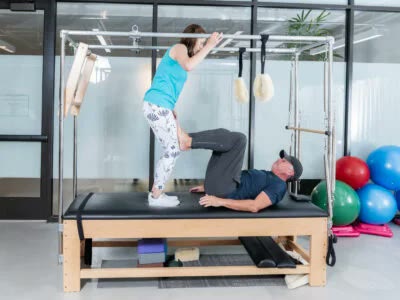
Golf, tennis, pickleball, baseball and hockey all depend on controlled rotation. Pilates works rotation with spring resistance, then challenges the body to resist rotation from a stable base. Lisa Wolkerstorfer, the instructor behind Denver Pilates Girl, demonstrates a simple version of this in her wood chop drill for golfers:
The high to low wood chop covers the same idea in the opposite direction.
3. It improves hip mobility without losing control
Tight hips change how athletes run, skate and swing. Leg circles in straps, frog, and side kick work move the hip through its full range while the pelvis stays steady. That combination of mobility and control is what athletes need to use new range on the field or the course.
4. It sharpens single-leg balance and foot control
Running, skiing, hiking and change-of-direction sports all happen one leg at a time. Standing work on the Wunda Chair and footwork on the Reformer train ankle, knee and hip alignment over a single foot. This kind of balance training is easy to skip in a typical gym routine.
5. It supports posture and breathing under fatigue
Pilates links every exercise to a breathing pattern. Athletes learn to keep their ribs and pelvis stacked and to breathe without bracing their neck and shoulders. That carries into late-game positions, when fatigue usually wrecks form.
6. It is a low-impact training day that still builds strength
Spring resistance lets an instructor scale load very precisely, and there is no pounding. That makes Pilates a useful active-recovery or deload session in a heavy training week. Athletes still work hard, but without adding impact on joints that are already busy.
7. It gives injured athletes a controlled way back to training
An athlete managing a back, hip or knee issue needs exercises that can be modified rep by rep. Classical Pilates equipment is built for that. Lisa has published longer equipment classes for clients managing spinal conditions, including a Pilates Tower workout for spinal stenosis and osteoporosis. Anyone with a diagnosed injury should clear new exercise with their physician or physical therapist first. Private sessions are the right starting point.
Reformer, Tower or mat: which is best for athletes?
- Reformer: a sliding carriage with springs. Great for leg power, hip control, and full-body strength with adjustable load.
- Tower: springs anchored to a frame. Strong for spinal mobility, shoulder control and assisted work, which makes it useful after injury.
- Wunda Chair: a small, demanding apparatus. Excellent for single-leg strength, balance and pressing patterns.
- Mat: the foundation of the method, using body weight only. It is the hardest place to hide weaknesses, and you can take it on the road.
Most athletes benefit from a mix. A short series of private sessions helps an instructor decide where to start.
Where can athletes train Classical Pilates in Denver?
Denver Pilates Girl is a boutique Classical Pilates studio inside the Gold Building (Galleria Towers) on S. Colorado Blvd, near Exposition Ave. It is about six minutes from Cherry Creek and roughly 15 minutes from the Denver Tech Center, with garage parking on Level B. Instructors have a minimum of 500 hours of classical training. Lisa also holds personal training and suspension training certifications and has a massage therapy background.
- Private sessions: 55 minutes, one on one, from $95. Packages lower the per-session rate. See current Pilates prices.
- Small group equipment classes: Reformer, Tower and Wunda Chair, five students maximum, from $32 per class with a package. See small group class times.
- New client intro: three private sessions for $180, so you learn the equipment before joining a group. Details are on the new client page.
- Studio: Denver Pilates Girl, 720 S. Colorado Blvd, Suite 125-A, Glendale, CO 80246. Phone (303) 531-0047. View on Google Maps.
How should an athlete start?
- Book private sessions first. The instructor assesses your history, your sport and any injuries, then teaches you the equipment.
- Train Pilates once or twice a week alongside your strength and sport work, not in place of it.
- Move into a five-person group class once the foundations are solid, and keep a private session in the rotation when you are preparing for a season or rehabbing.
Frequently asked questions
Is Pilates good for athletes?
Yes. Pilates builds trunk control, hip mobility, balance and controlled rotation, which complement strength and conditioning work. It is low impact, so it fits recovery days and return-to-play phases.
How often should athletes do Pilates?
Once or twice a week is a common rhythm alongside sport training and lifting. Denver Pilates Girl has a guide on how often to practice Pilates.
What is the difference between Classical Pilates and other Pilates classes?
Classical Pilates follows Joseph Pilates’ original exercises and order on traditional equipment such as the Reformer, Tower and Wunda Chair. Many contemporary or fitness-style classes mix in other formats.
Where is Denver Pilates Girl located?
720 S. Colorado Blvd, Suite 125-A, Glendale, CO 80246, inside the Gold Building near Colorado Blvd and Exposition. Park in the garage on Level B.
Can I do Pilates with an injury?
Often, yes, with clearance from your healthcare provider and in private sessions where every exercise can be modified. Group classes are not recommended for people with certain injuries or conditions.
Studio details, pricing and class formats are from denverpilatesgirl.com and the studio’s Google Business Profile as of October 2026. This article is general education, not medical advice. Photos courtesy of Denver Pilates Girl.