The difference between the athlete who peaks at thirty and the one still competing at thirty-eight is not genetics, not talent, and not luck. It is what they do between the performances.
And most programs are getting that part wrong in exactly the same way.
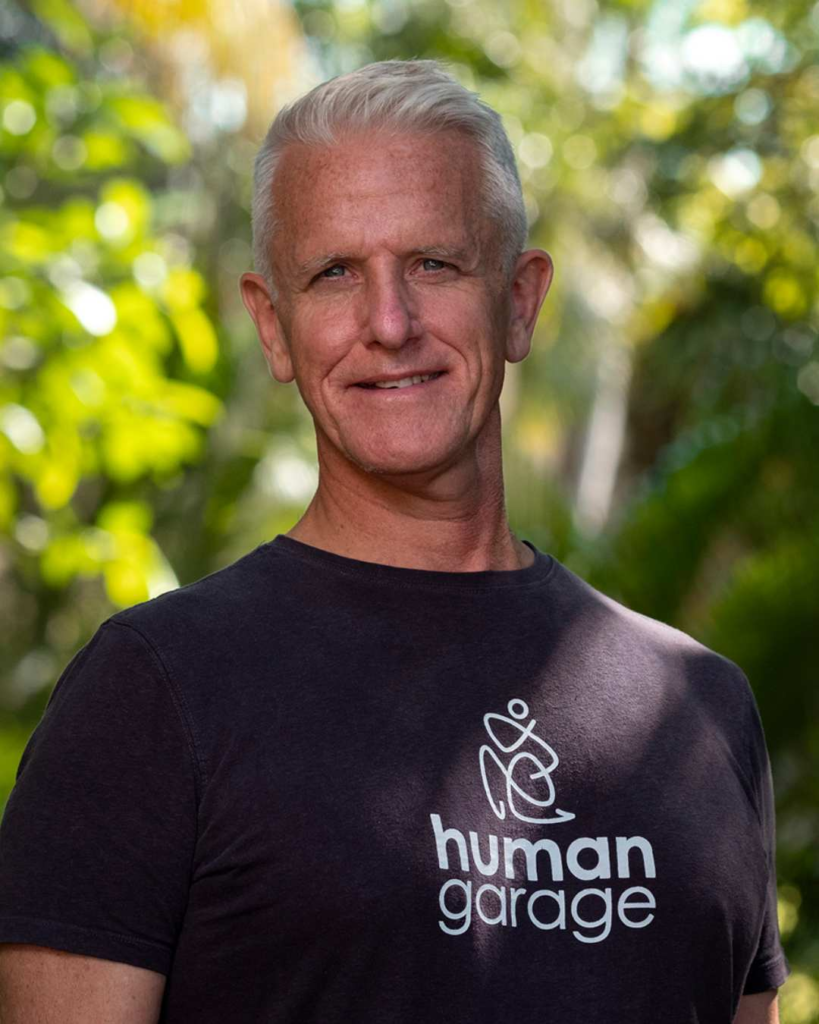
Garry Lineham, co-founder of Human Garage and creator of Fascial Maneuvers™, will deliver a keynote at the Berlin Life Summit on May 29 and 30, 2026. The event is part of Longevity Week Berlin, features more than 120 global experts across longevity science, biotechnology, and human performance, and draws over 3,000 participants. It is one of Europe’s most credentialed health and performance conferences, and Lineham’s selection places Human Garage on a stage alongside the institutions actively shaping how the science community understands human performance at its highest level.
The method he is bringing to Berlin is practiced daily by nearly 40 million people across more than 80 countries. That number did not come from a viral marketing campaign or a celebrity endorsement. It came from athletes, coaches, and active people finding something that worked in the recovery window and telling every person they trained with about it.
When a performance method reaches 40 million daily practitioners through word of mouth alone, the sports world owes it a serious look.
The Recovery Variable That Training Programs Keep Ignoring
Every serious athlete understands the basics of recovery. Sleep. Nutrition. Active rest. Soft tissue work. Ice baths if the team budget allows. Those variables are established, coached, and monitored at every level of competitive sport from high school programs to professional franchises.
What almost none of those programs systematically address is the fascial system.
Fascia is the connective tissue network that encases every muscle, nerve, and organ in the body. It is not passive packaging. It is an active, force-transmitting, sensory-rich system that plays a direct role in how efficiently an athlete moves, how precisely the neuromuscular system coordinates complex athletic movements, and how completely the body restores itself between training sessions and competitive events.
Here is the performance number that matters. Fascia contains more sensory nerve endings than muscle tissue. That density means the condition of the fascial system directly affects proprioception, the body’s ability to sense and regulate its own position and movement in real time. When proprioceptive accuracy drops because the fascial system is restricted, the athlete’s neuromuscular precision degrades. Reaction time slows marginally. Force production becomes less efficient. The body works harder to execute movements it should be able to produce automatically.
At the recreational level those marginal degradations produce the persistent feeling that the body is not quite responding the way the training investment should be producing. At the competitive level they are the fractions of a second, the inches, and the small technique breakdowns that separate podium finishes from near misses.
Lineham spent years at a clinic in Venice Beach addressing exactly those degradations in athletes and active people who had been through conventional programs without resolution. What he developed through that direct clinical work became Fascial Maneuvers™, a daily practice using intentional movement, deliberate breath, and body awareness to restore fascial health and give the body back the recovery efficiency it was designed to have.
Forty million daily practitioners later, the performance case is not theoretical anymore.
What 40 Million Daily Practitioners Actually Tells the Sports World
Numbers in sports mean something. That is the entire foundation of how athletic achievement gets evaluated, compared, and remembered. So take a moment with this one.
Nearly 40 million people practice Fascial Maneuvers™ every single day across more than 80 countries. To put that in competitive context, the entire NBA viewership across all platforms during the 2023 playoffs was roughly 10 million per game. The method Lineham built from a single Venice Beach clinic reaches four times that audience every twenty-four hours as a daily practice, not a passive viewing experience.
That scale of adoption in a recovery method signals something the sports performance community needs to take seriously. Methods at that reach do not sustain daily practice through marketing momentum. They sustain it because the practitioner can feel the result consistently enough to keep choosing the practice over everything else competing for their recovery time.
The adoption pattern itself is a clinical signal. When a method reaches athletes across more than 80 countries with wildly different training cultures, competitive contexts, and physical demands, and they all report consistent enough results to maintain daily practice, the underlying mechanism is real. The fascial system does not care what sport you play or what country you come from. It operates according to the same physiological principles everywhere.
Lineham describes the Berlin keynote as the next step in a mission that began with one clinic in Venice Beach and now spans 80 countries. That statement carries the energy of someone who is not finished yet. Not celebrating an arrival. Executing the next phase of something larger. That mindset distinction mirrors exactly how the athletes who sustain the longest and most productive careers talk about their own development. Not there yet. Next step. Mission in progress.
The Athletic Longevity Equation That Berlin Is About to Hear
The Berlin Life Summit’s programming focuses on the latest findings in longevity research and human performance. That context is specifically relevant to the sports world because athletic longevity is one of the most valuable and least consistently achievable outcomes in competitive sport.
The athlete who can sustain peak performance across more seasons, more competition cycles, more cumulative physical demand than their peers is worth exponentially more to a team, a program, and their own career than the athlete with equal peak ability whose body breaks down at the first sign of serious load. Every coach, every general manager, every athletic trainer working at any level of competitive sport is trying to solve that longevity equation.
The fascial system is a central variable in that equation that most programs have not yet integrated into their approach. Fascial restriction accumulates across a competitive career with the same inevitability as muscle fatigue, joint wear, and accumulated neurological demand. Unlike those other variables, it responds exceptionally well to a daily practice specifically designed to address it. The investment is minimal. The return, in terms of sustained movement quality, recovery efficiency, and reduced injury risk across a long competitive career, is compounding.
Human Garage describes its mission as restoring the body’s natural ability to heal through movement, breath, and awareness. For the sports world, that mission translates directly to the athletic longevity problem. A body that can restore itself more completely between competitive demands is a body that can sustain elite performance longer. That is not a wellness claim. It is a performance claim grounded in the physiology of how the fascial system actually functions under sustained athletic load.
The Berlin stage will introduce that argument to longevity scientists and biotech researchers who have the credentialing to evaluate it at the highest level of scientific scrutiny.
The Sports Performance Application That Coaches Need to See
Practical integration of fascial recovery into a competitive athletic program is not a revolution in training architecture. It is an addition to existing structure that addresses a gap most programs currently leave open.
For the strength and conditioning coach managing an athlete through a competitive season, fascial work belongs in three specific places. Pre-training, as a preparation practice that restores the fascial system’s optimal state before training load is applied, improving the quality of every subsequent session. Post-training, as a recovery accelerator that helps the body process the mechanical stress of the session and begin restoration before the next day’s demand arrives. Between competitive blocks, as a foundational reset that prevents the accumulation of fascial restriction that gradually degrades performance quality across a long season.
For the athletic trainer managing injury risk across a roster, the fascial system represents an underutilized lever in the injury prevention toolkit. The compensation patterns that fascial restriction creates, the altered recruitment strategies, the reduced proprioceptive precision, the degraded force transmission efficiency, are precursors to the overuse injuries and acute breakdown events that training staff spend most of their time managing after the fact. Addressing the fascial system proactively changes the conditions under which those injuries develop.
For the athlete managing their own body across a career that places demands on it that conventional recovery methods were not specifically designed to handle, Fascial Maneuvers™ offers something that the recovery landscape genuinely needed. A daily practice requiring no equipment, no specialized environment, and minimal time that directly addresses the connective system every other recovery modality works around.
The full Human Garage method and resources are available at humangarage.net. The Berlin keynote on May 29 and 30, 2026 will introduce the science to the global performance research community.
Frequently Asked Questions
How does fascial health directly affect athletic performance? Fascial health affects athletic performance through three primary mechanisms: force transmission efficiency, neuromuscular coordination precision, and recovery completeness between training sessions. Fascia contains more sensory nerve endings than muscle tissue, meaning fascial restriction directly degrades proprioceptive accuracy and neuromuscular coordination. At the competitive level, those degradations manifest as reduced reaction time, less efficient force production, and technique breakdown under fatigue. Addressing fascial health through a structured daily practice restores those performance variables by returning the connective system to its optimal functional state.
What is Fascial Maneuvers™ and why are 40 million people using it daily? Fascial Maneuvers™ is a daily self-healing practice created by Garry Lineham, co-founder of Human Garage, that uses intentional movement, deliberate breath, and body awareness to restore the fascial connective tissue system. It requires no equipment, no gym access, and minimal time. Its reach of nearly 40 million daily practitioners across more than 80 countries reflects consistent, perceptible results that sustain daily practice across a highly diverse global population of athletes and active people.
How does the fascial system contribute to athletic injury risk? Fascial restriction creates compensation patterns in which the body recruits muscle groups in ways they were not designed to sustain in order to maintain movement function despite reduced connective tissue pliability. Those compensation patterns increase mechanical stress on specific structures, reduce movement economy, and degrade the proprioceptive accuracy that allows athletes to protect themselves instinctively during high-speed, high-load movements. Addressing fascial restriction through regular intentional practice reduces those compensation patterns and restores the movement efficiency and proprioceptive precision that constitute the body’s primary injury prevention system.
What is the Berlin Life Summit and why does Garry Lineham’s keynote matter for sports performance? The Berlin Life Summit is a two-day health and longevity conference held May 29 and 30, 2026 in Berlin, Germany as part of Longevity Week Berlin, featuring more than 120 speakers across longevity science, biotechnology, and human performance with over 3,000 participants. Lineham’s keynote places Human Garage’s fascial health framework in formal conversation with the global performance and longevity science community, signaling growing mainstream scientific recognition of the fascial system as a significant variable in athletic performance, recovery efficiency, and long-term physical capacity. Full details at lifesummit.berlin.
How should coaches integrate fascial recovery into existing athletic programs? Fascial recovery integrates most effectively into existing athletic programs at three structural points: as a pre-training preparation practice that optimizes the fascial system’s state before training load is applied, as a post-training recovery accelerator that improves restoration between sessions, and as a maintenance practice in lower-demand training periods that prevents the accumulation of fascial restriction across a competitive season. The time investment is modest relative to the performance return in movement quality, recovery efficiency, and reduced injury risk, making it one of the highest-leverage additions available to programs looking to improve athletic longevity without restructuring existing training architecture.
The Performance Case Is Already Closed
The sports world has always been willing to adopt whatever gives athletes a legitimate edge. Ice baths went from fringe recovery practice to standard protocol once the results were consistent enough to justify the installation cost. Heart rate variability monitoring went from research tool to locker room staple once the performance data made the investment obvious. Blood flow restriction training went from rehabilitation technique to mainstream strength protocol once the strength gains at reduced load were documented clearly enough to change how coaches thought about training economy.
Fascial recovery is on that same trajectory. The clinical signal from 40 million daily practitioners across 80 countries is already stronger than the early evidence base that justified most of the protocols currently standard in elite sport. The Berlin Life Summit keynote will accelerate the scientific validation. The athletes who integrate fascial health practices into their programs now are not early adopters taking a risk. They are ahead of a curve that the rest of the sports performance world is about to catch up to.
Garry Lineham built something in Venice Beach that 40 million people chose to make part of their daily athletic practice. The Berlin stage is where the science community formally acknowledges what those 40 million already know.
The only question left for coaches, athletic trainers, and athletes serious about performance longevity is how long they are willing to wait before they start paying attention.
Read next: The Athletic Longevity Blueprint: What the Longest Careers in Sports Have in Common
Written by the Seismic Sports editorial team. Seismic Sports covers the stories, performances, and science behind sports and entertainment, delivering high-energy analysis and reporting for fans who demand more than the scoreline.